
What To Do in the First 24 Hours After a Car Accident in Massachusetts
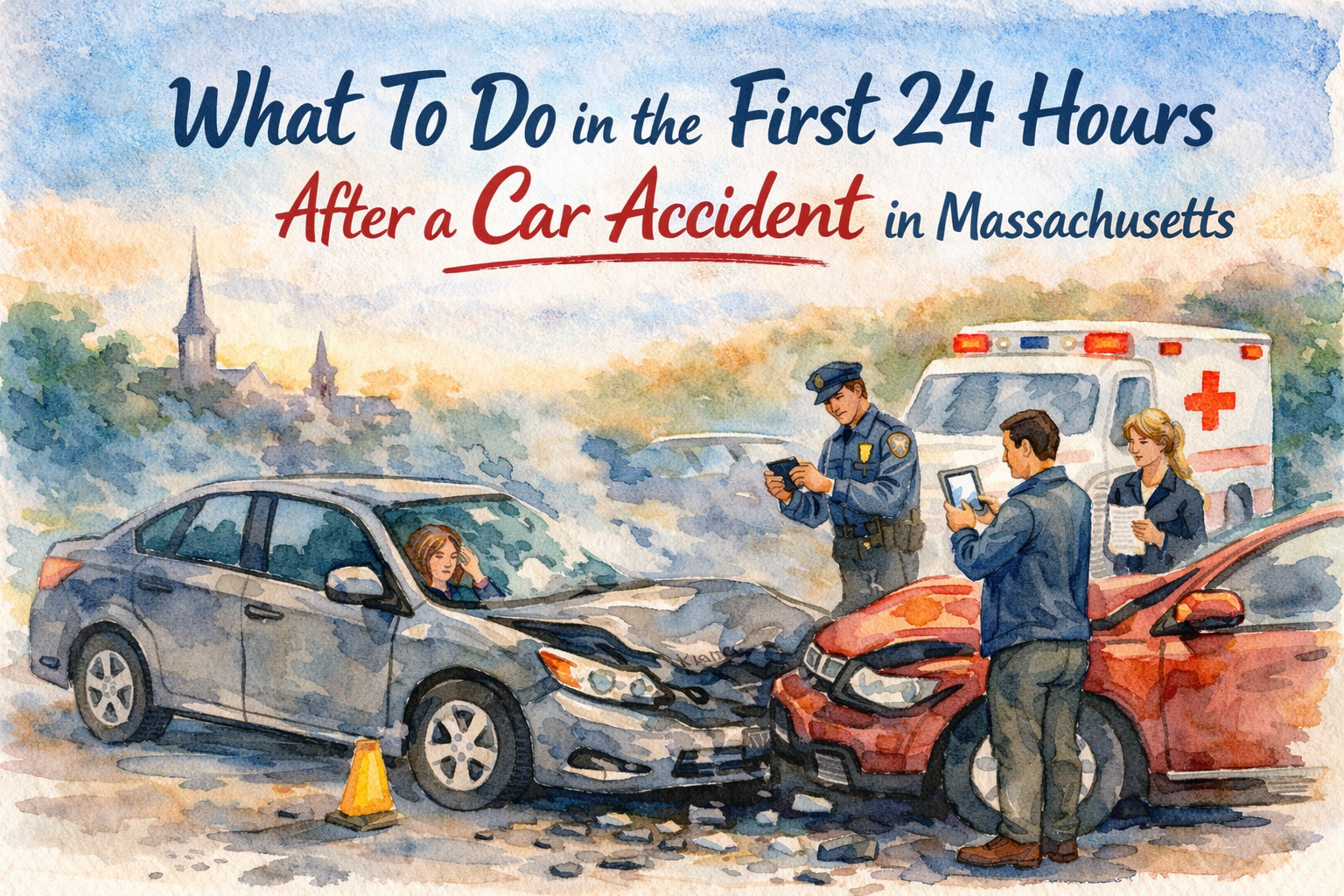
The first 24 hours after a car accident are chaotic, painful, and disorienting — especially around Lowell, where traffic patterns, busy intersections, and high-speed roadways make crashes more severe than people expect. Yet this short window is also the most critical period for protecting your health, your legal rights, and your ability to recover full compensation.
Most mistakes that destroy cases happen right here — in the first day — long before a victim has spoken to a lawyer.
Here is exactly what you need to do
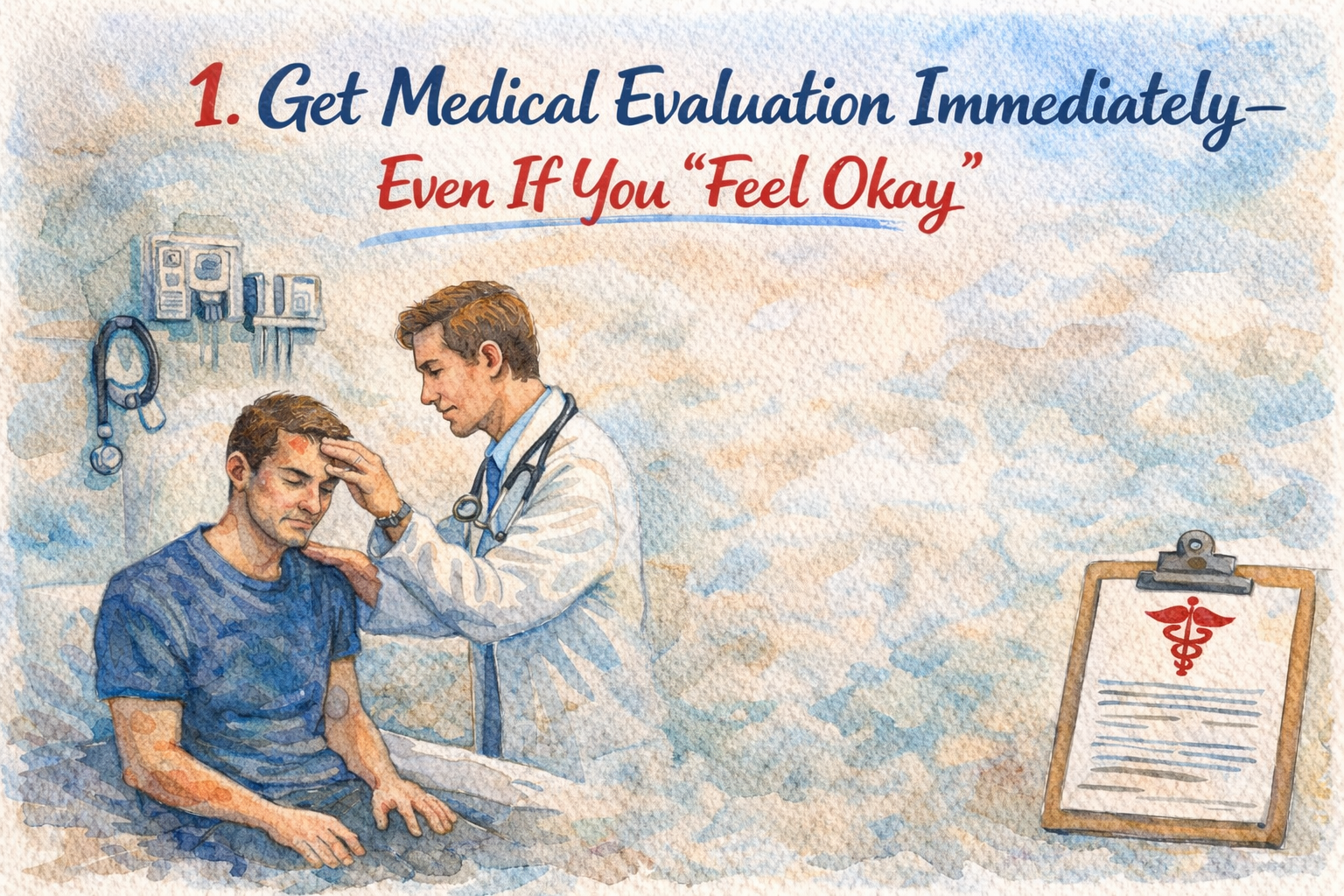
1. Get Medical Evaluation Immediately — Even If You “Feel Okay”
Adrenaline hides injuries.
Shock hides injuries.
Muscle trauma, disc injuries, and head injuries rarely feel “severe” right away.
In the first 24 hours, you should be evaluated at:
Your Primary Care Physician’s (family doctor’s) office if possible
Lowell General Hospital
Saints Campus
Any Circle Health Urgent Care
ConvenientMD (for Southern NH residents)
Why this matters legally:
Insurance companies argue that delays mean you weren’t hurt.
They say this every single time. A same-day medical visit shuts that argument down.

2. Photograph Everything (More Than You Think You Need)
Everyone photographs their car damage.
Almost no one photographs the scene.
You want photos of:
Both vehicles (multiple angles)
The other driver’s damage
The roadway
Skid marks
Traffic signals
Debris patterns
Your visible injuries
The surrounding intersection
Any obstructions or visual hazards
The people involved (drivers and passengers of all vehicles where possible)
The other driver’s license and registration
These photos are often the difference between a clean liability decision and months of insurance company excuses

3. Do NOT Speak to the Insurance Company
Within hours of your crash, the other driver’s insurer will call you.
They will sound helpful.
They will sound friendly.
They are not.
They want you to say:
“I’m okay.”
“I’m not sure if I’m hurt.”
“It doesn’t seem that bad.”
Later, they will use your exact words against you.
If they call, say:
“I am seeking legal representation and will not be giving a statement.”
That is enough.
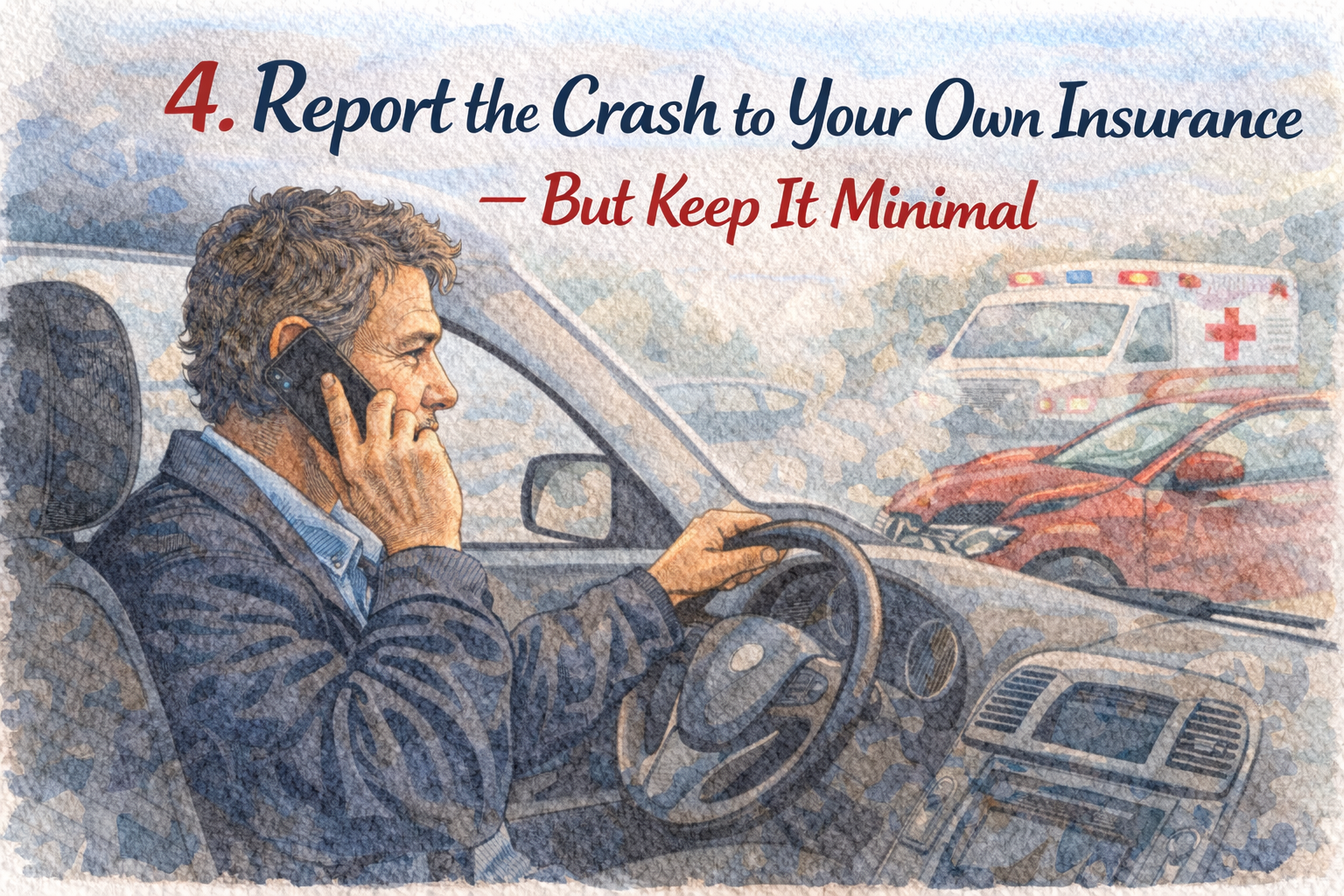
4. Report the Crash to Your Own Insurance — or better yet, let us do it
You do need to notify your insurer.
But you do not need to give details, opinions, estimates of speed, or descriptions of pain.
Stick to the basics:
Time
Location
That you were struck
Where your car can be seen if you have collision coverage
That you intend to seek medical attention
That you will be seeking legal counsel and your attorney will answer all other questions.
Nothing more.
Even better, if you contact us right away, we can handle the initial reporting for you. That helps prevent the insurance company from taking a recorded statement and saves you a lot of stress and aggravation.
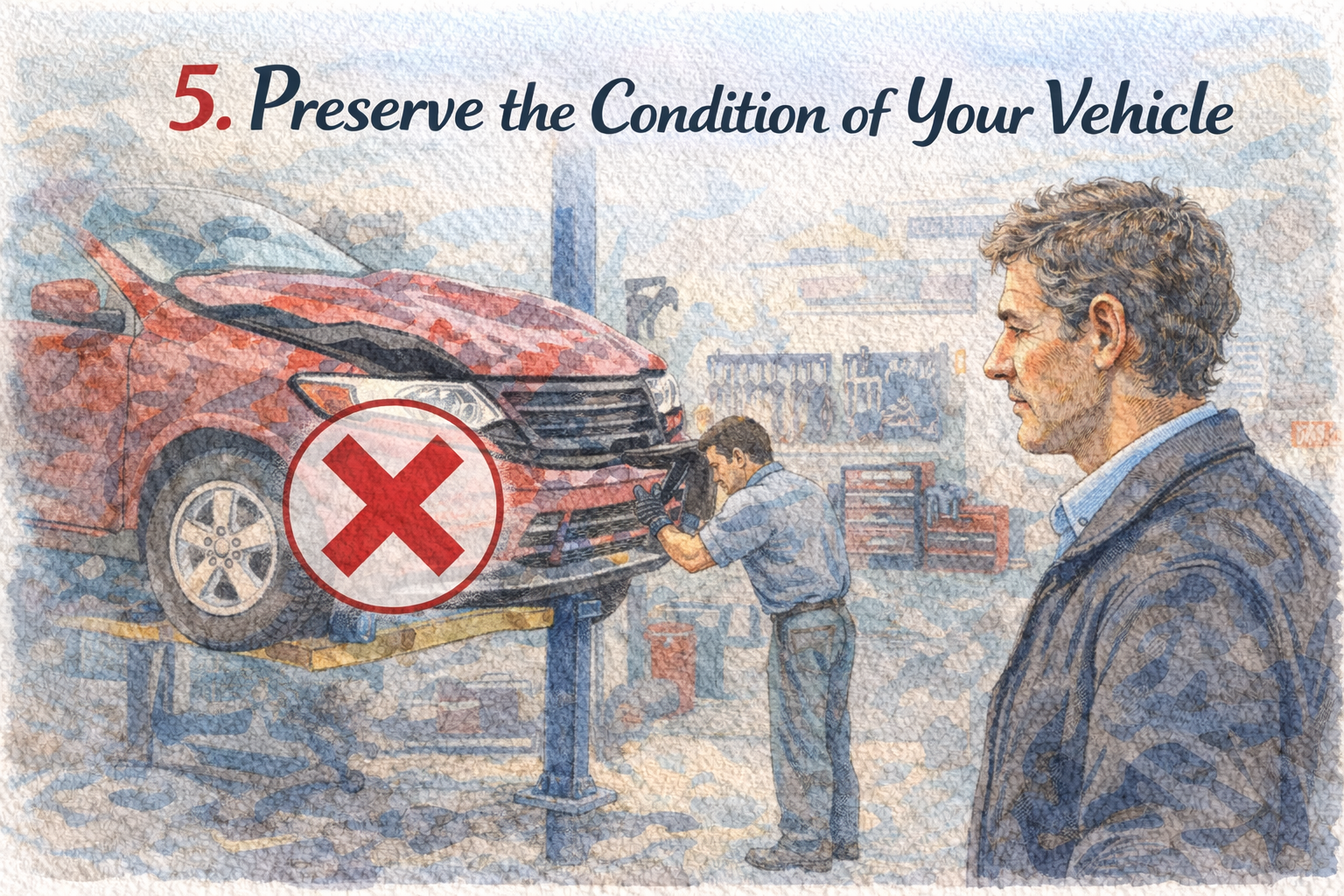
5. Preserve the Condition of Your Vehicle
Do not:
Repair the car
Dispose of the car
Allow friends to fix it “cheaply”
Until the damage is properly documented, you risk erasing the evidence that proves the severity of the crash. Keep in mind that the initial appraisal rarely captures, or even comes close to capturing, the full extent of the damage.
Even worse: low-quality repairs or undocumented repairs make it easier for insurers to argue you were not injured. They take the position that a low cost repair equals minimal to no injry.
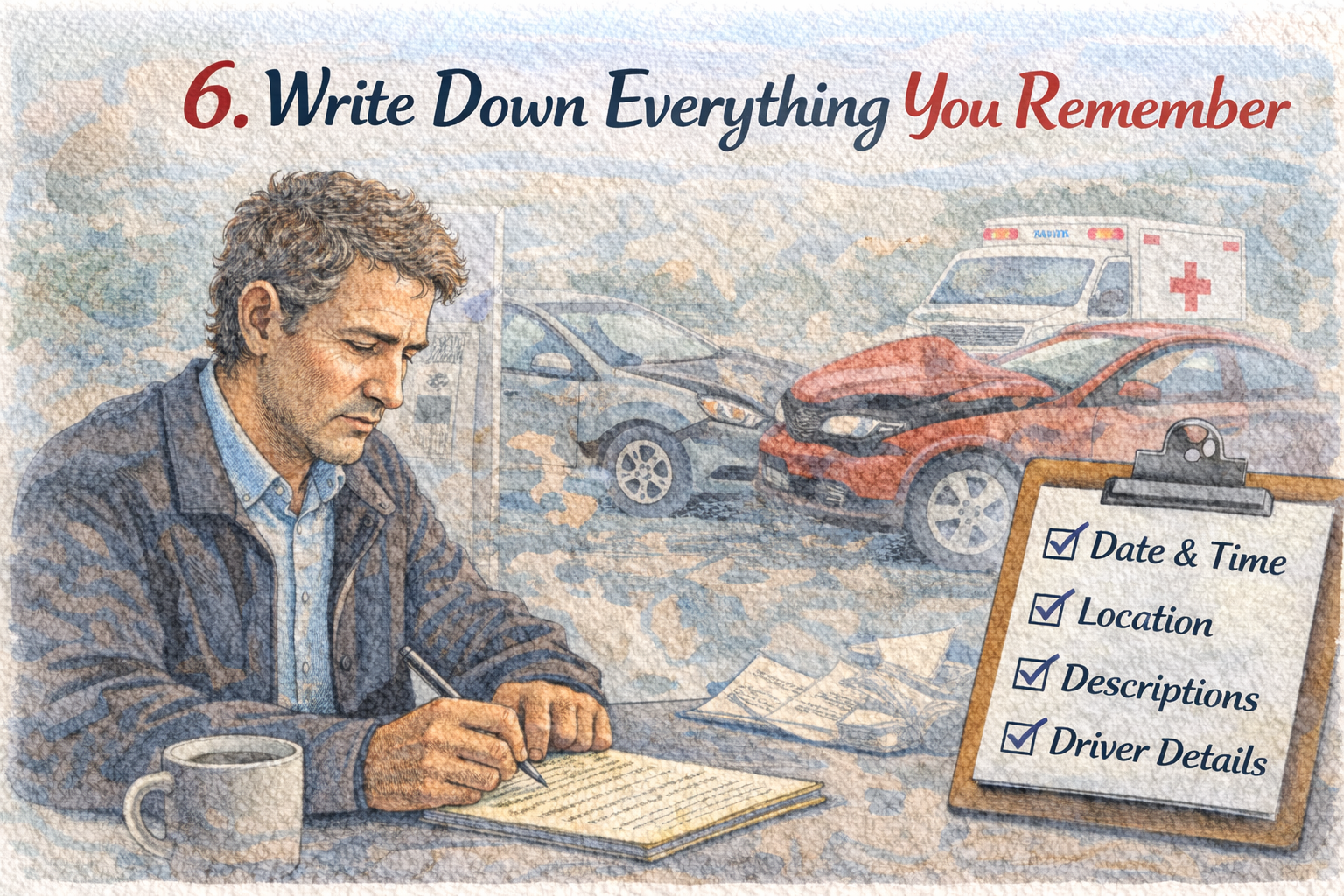
6. Write Down Everything You Remember
Memory fades shockingly fast after an accident.
Within 24 hours, write down:
What you saw before the impact
What the other driver did
Weather and visibility
Road conditions
What you felt physically
Any comments the other driver made (“I didn’t see you,” “My brakes failed,” etc.)
This written account is extremely helpful later.
7. Call Me Early (Not Weeks Later)
People sometimes hesitate to call a lawyer because they think:
“I’m not that hurt.”
“I don’t want to cause trouble.”
“Maybe it will all sort itself out.”
It won’t.
Early legal guidance prevents:
Damaging recorded statements
Missed medical documentation
PIP billing disasters
Repair documentation errors
Lost evidence
Unintentionally admitting fault
Treatment gaps
A good attorney doesn’t just help build the case — they protect you from day one. Coming in early also allows us to help you to set up your claims: do the initial paperwork (which can be extensive); deal with the collision and rental issues and find providers and set up appointments.
“If you were injured in a crash in Lowell, the Merrimack Valley, or Southern New Hampshire, call or text our office at 978-459-8359 for a free consultation. We can deal with the insurance company so you can focus on getting better.”
Want the complete guide?
Read the full eBook here: What To Do in the First 24 Hours After a Car Accident in Massachusetts