
What if the other driver’s insurance isn’t enough after a car accident?
After a serious car accident, one of the first questions is often: How much insurance does the other driver have? But the first policy limit you hear may not tell the whole story.
Depending on the circumstances, additional coverage may come from an umbrella policy, an employer’s commercial insurance, another policy connected to the vehicle or driver, or even your own uninsured or underinsured motorist coverage. Massachusetts recognizes these types of coverage, although whether they apply and how much can be recovered depends on the applicable policies and the facts of the accident.
In some of our cases, looking beyond the first policy dramatically changed the amount of insurance available.
When $300,000 in Coverage became $1.3 Million
A motorcyclist was seriously injured when a 17-year-old driver made a left turn in front of him. At first, fault was disputed. Then video from a nearby coffee shop helped resolve the question of how the accident happened.
The vehicle carried $300,000 in insurance coverage. For a serious injury case, however, that appeared to be the primary source of recovery, with little else realistically available from the driver personally.
So the investigation did not stop with the auto policy.
A search uncovered a $1 million umbrella policy that applied to the teenage driver. That increased the total available insurance from $300,000 to $1.3 million. The case ultimately settled for the full $1.3 million.
The difference was not simply proving who caused the accident. It was identifying another policy that could respond to the claim.
What if the driver was working when the accident happened?
Sometimes the important question is not only who was driving, but why they were driving.
In another case, a nurse suffered a herniated disc that left her unable to continue working on hospital floors.
The individual driver carried only a 10/20 auto policy. But the investigation showed that the driver had been acting within the scope of his employment at the time of the accident.
That opened another potential source of recovery: the employer’s commercial insurance.
Because the injury affected the nurse’s ability to continue her career. For someone facing a long-term loss of income, identifying the right insurance coverage can be just as important as documenting the injury itself.
Sometimes another Auto Policy may matter
Coverage questions can become more complicated when the person driving does not own the vehicle involved in the accident.
Depending on the policies and circumstances, more than one policy may need to be examined to determine what coverage is available. Massachusetts auto policies can differ, so coverage cannot be determined simply by assuming that the insurance on the vehicle is the only policy that matters.
That is why a coverage investigation may include not only the vehicle involved in the crash, but also the driver, the vehicle owner and other potentially applicable insurance.
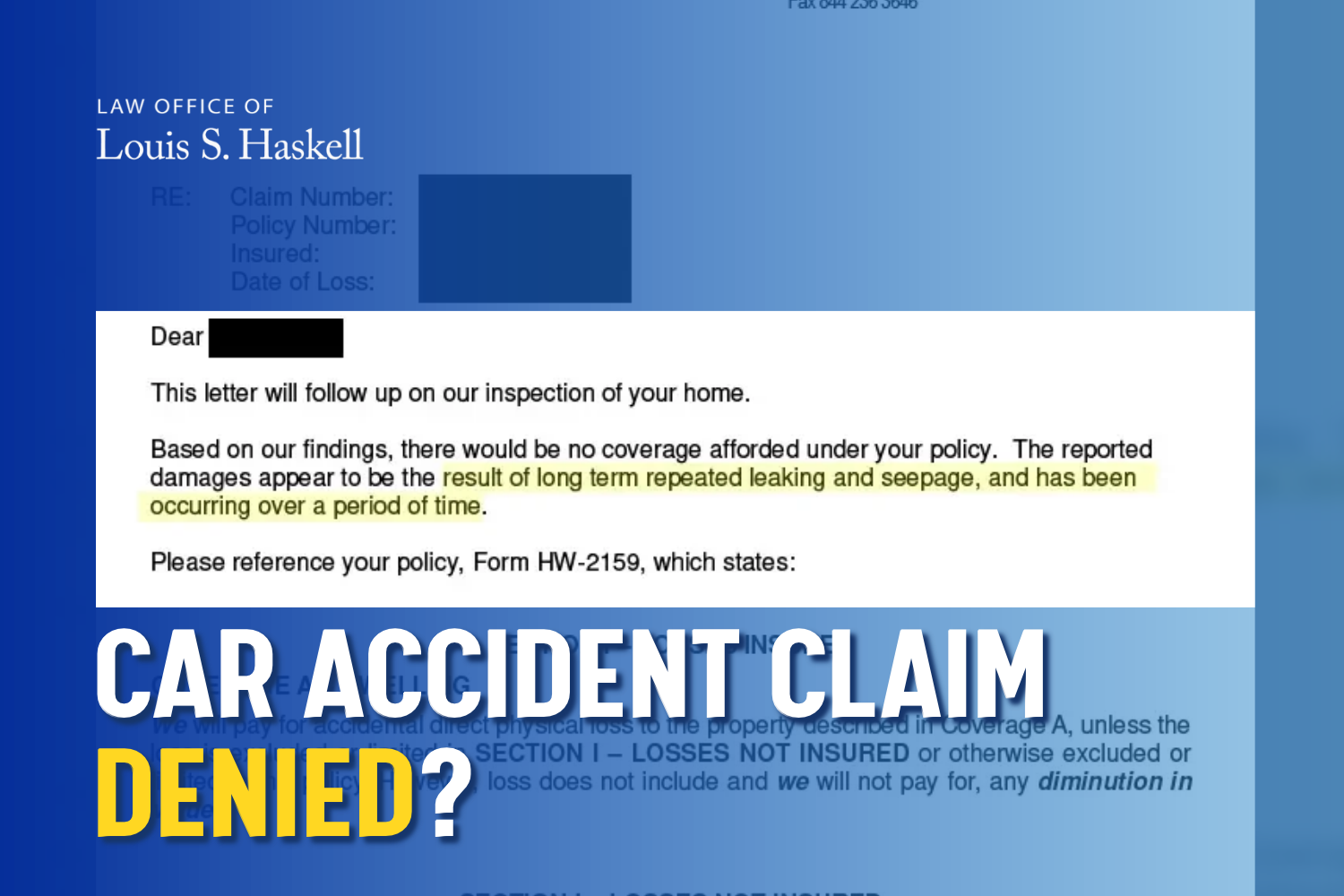
What if the Insurance Company says there is no Coverage?
Finding a policy does not always mean the insurer will agree to pay.
In one case, a driver fleeing arrest injured a police officer. The driver’s insurer refused to pay its $10,000 policy limit, arguing that what happened was not an “accident.”
The issue became whether the injury could still be considered accidental for insurance purposes. The argument was that the driver was focused on escaping, rather than intending to injure the officer.
After a Chapter 93A demand letter, the insurer tendered the $10,000 limit.
That was not the end of the recovery. The officer’s own underinsured motorist carrier then tendered another $100,000.
Massachusetts law provides for uninsured motorist coverage and permits additional coverage for injuries caused by an underinsured vehicle, subject to the applicable policy terms and limits.
What if the other driver cannot be found?
Your own insurance may become especially important after a hit-and-run.
Three young women came to our office after another lawyer had told them their case had no value. The driver who caused the crash had fled, leaving no liability policy to pursue directly.
But the women had uninsured motorist coverage of $50,000 per person and $100,000 per accident.
That coverage resulted in a recovery of the full $100,000.
Massachusetts requires uninsured motorist coverage as part of automobile insurance, and drivers may purchase higher limits.
Timing can also depend on the type of claim being pursued. Massachusetts generally applies a six-year limitations period to contract claims and a three-year period to personal injury tort claims, although exceptions and questions about when a claim accrues can affect the deadline in a particular case.
Where can additional Insurance Coverage come from?
When the injuries are serious, and the first policy appears inadequate, the coverage investigation should not necessarily end there. Depending on the circumstances, it may be necessary to examine:
The policy covering the vehicle involved in the accident
Insurance covering the person who was driving
An umbrella or excess liability policy
An employer’s commercial insurance if the driver was working
The injured person’s own uninsured or underinsured motorist coverage
Not every accident will have another policy waiting to be found. Coverage depends on the facts, the people and vehicles involved, and the language of the applicable insurance policies.
But a small initial policy limit should not automatically be treated as the end of the investigation.
The Policy Limit you hear first may not be the final answer
When someone suffers a serious injury, knowing that the other driver has limited insurance can be discouraging.
But the amount printed on the first policy is only one part of the coverage analysis.
The driver may have an umbrella policy. An employer may be involved. Another auto policy may apply. Or the injured person may have uninsured or underinsured motorist protection of their own.
Finding those additional sources can make the difference between a claim that appears to have very limited coverage and one with enough insurance to more meaningfully address the losses caused by a serious accident.
If you were injured in a Massachusetts car accident and have been told that there is little or no insurance available, the Law Office of Louis S. Haskell can review the accident and the potentially applicable insurance coverage.
Every case is different. Past results do not guarantee a similar outcome. This article provides general information and is not legal advice.
TL;DR
The first policy limit may not be the only available coverage.
Other sources can include umbrella, employer and UM/UIM coverage.
Finding additional insurance can significantly change a serious injury case.
In one of our cases, $300,000 in known coverage ultimately became a $1.3 million settlement.
Not sure what your options are?
Tell us about your situation. Complete the form below to request a consultation and discuss which options may be available to you.
The other driver's insurance limit may not be the only coverage available after a car accident. Discover how umbrella policies, employer insurance, and other coverage helped increase settlements in real Massachusetts cases.